
What it is
A small IDE that knows the 2600
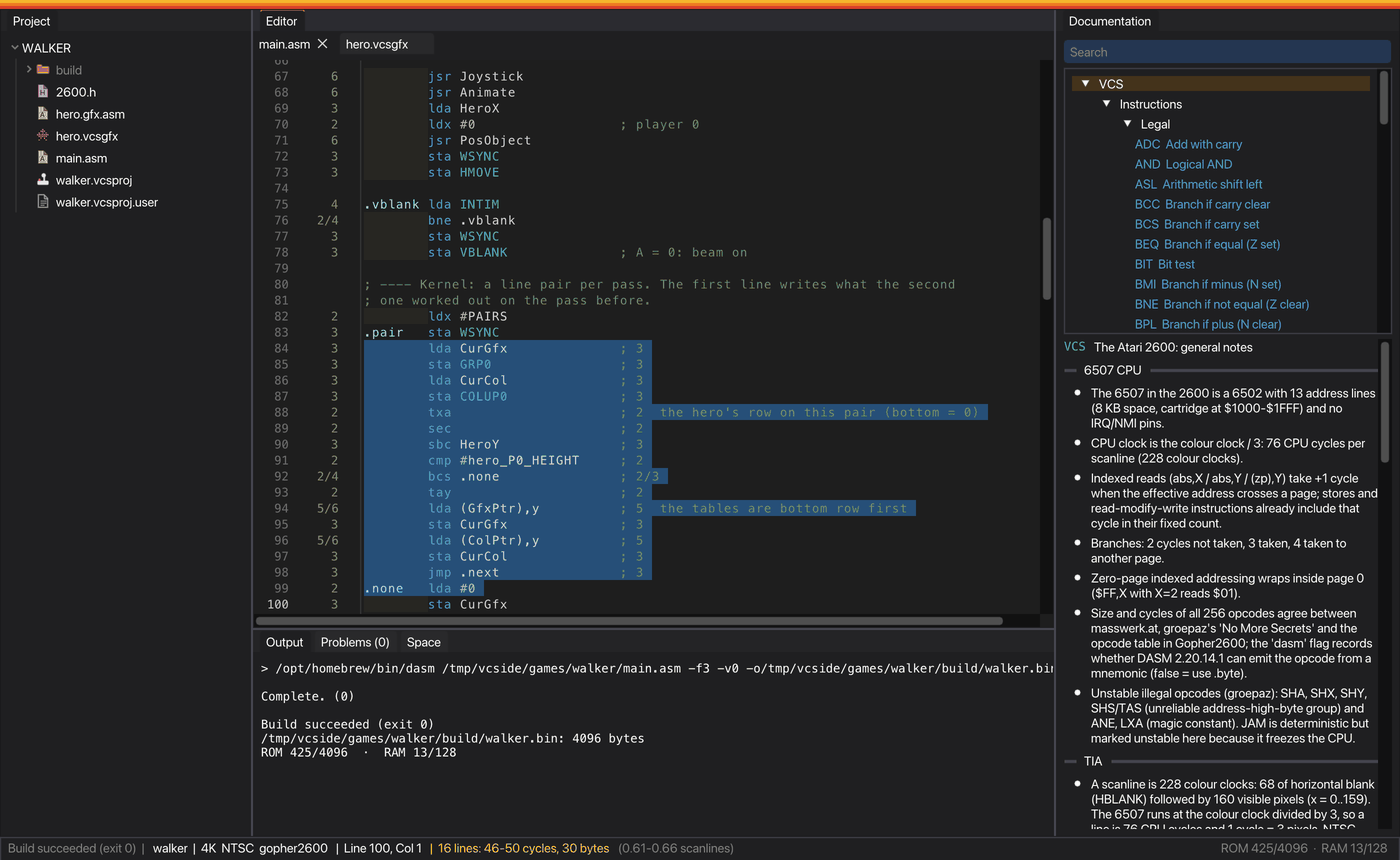
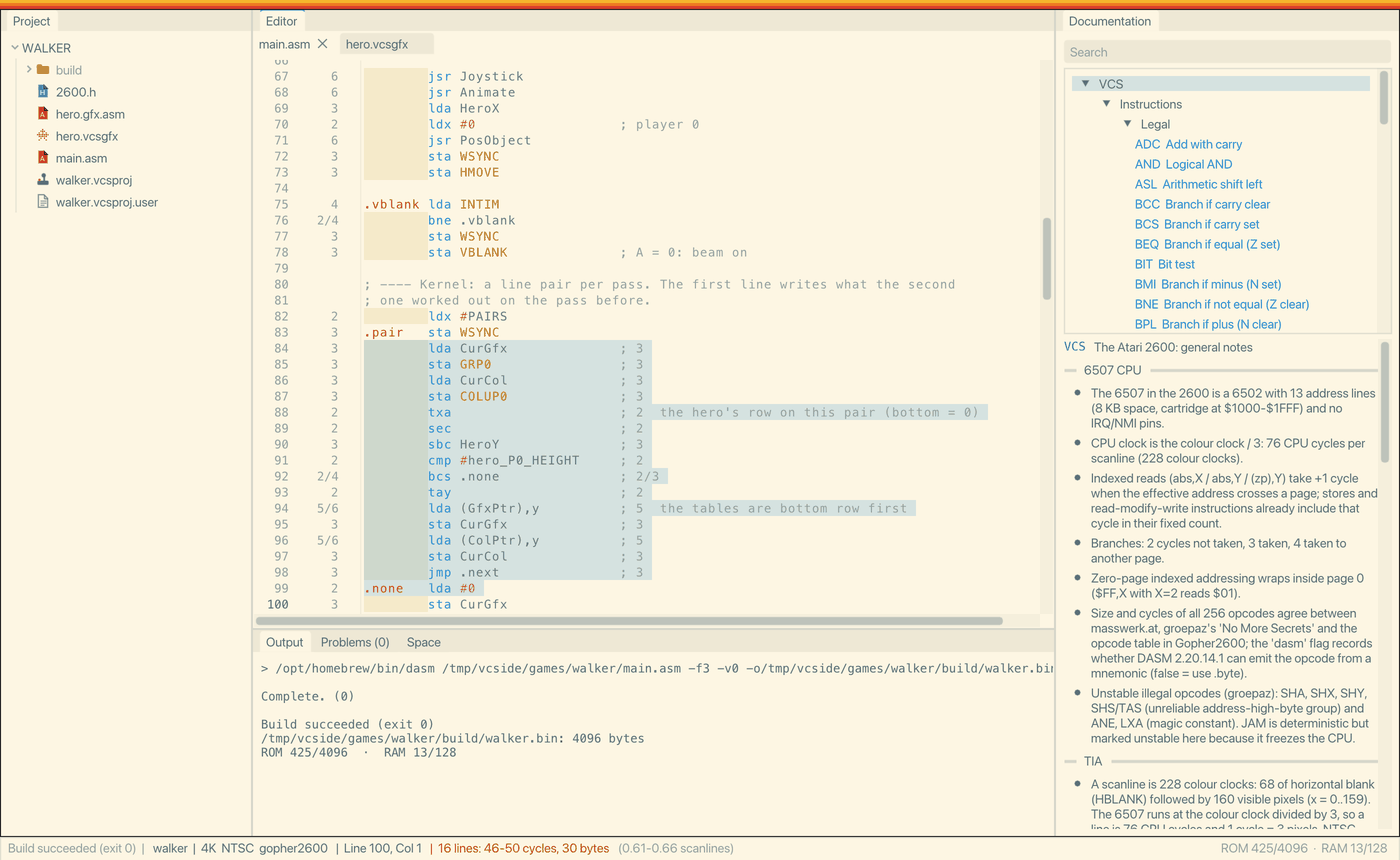
VCSIDE is a native program for writing Atari 2600 games in assembly, batari Basic, TinyELF Basic or C for ELF and ACE cartridges. It counts cycles as you type, draws sprites the way the TIA will, tells you how much room is left in every bank and starts Stella or Gopher2600 with your breakpoints already set.
The goal is a tool that is light on resources, gets the job done, and is fully integrated with everything you need to make, test and debug a 2600 game: the assembler or compiler, the emulators and their debuggers, the graphics and the documentation, all in one place.
It is one executable built with C++ and Dear ImGui, the same on macOS, Windows and Linux. It is not an editor plug-in: it is made only for the 2600, and everything in it is about the console.
New in 0.3.0
TinyELF Basic, the 7800 and a C editor that checks as you type
- TinyELF Basic projects: a BASIC listing that runs at power-on, in Gopher2600 or on a PlusCart or UnoCart, written to a real SaveKey through a PicoBridge.
- The Atari 7800 on the Chameleon Cart: Test7800, a dual 2600/7800 example and VCSIDE The Game with its own 7800 screens.
- In the editor: C checked by the compiler as you type, C colouring and go to definition, find in files, and open files reloaded when another program changes them.
- The emulated cartridge sets the ARM's clock in the emulators, and Upload to the PlusStore puts the ROM in your PlusStore account.
- The assistant draws sprites and writes music, assembles its changes before you see them and guides small models step by step. The knowledge base is in Spanish too.
What's in the box
Every part, explained in the manual
Cycle-counting editor
A cycle column on every instruction, totals for a selection, help on hover, completion and jumps to a definition.
The code editor →Build and debug
DASM, batari Basic or make with F7. Errors on their line, F5 to run, F6 to debug with breakpoints in Stella or Gopher2600.
Build, run and debug →Space report
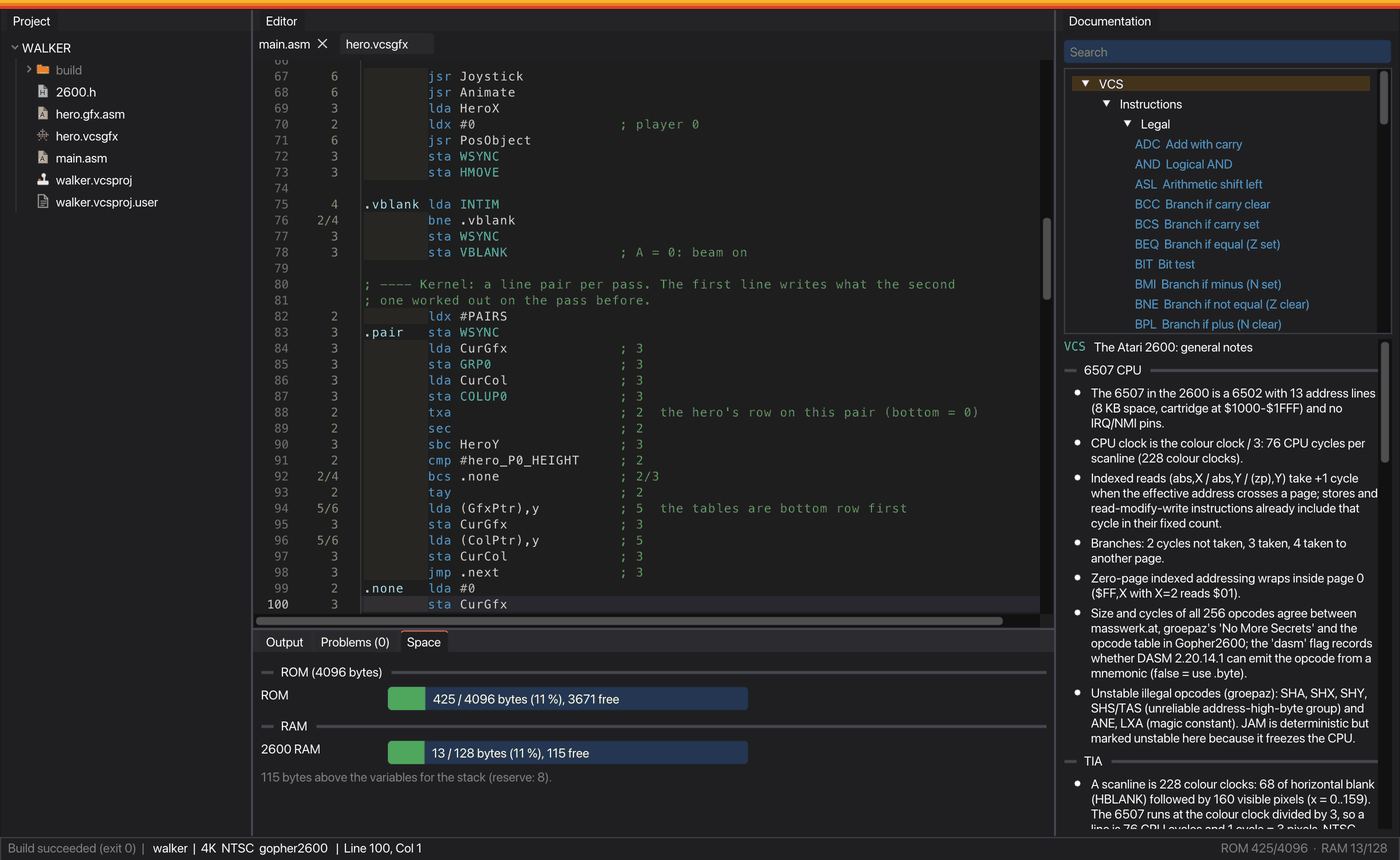
Bytes used and free per bank, RAM left for the stack, cartridge RAM, and the flash and RAM of ELF cartridges.
Space report →Graphics editor
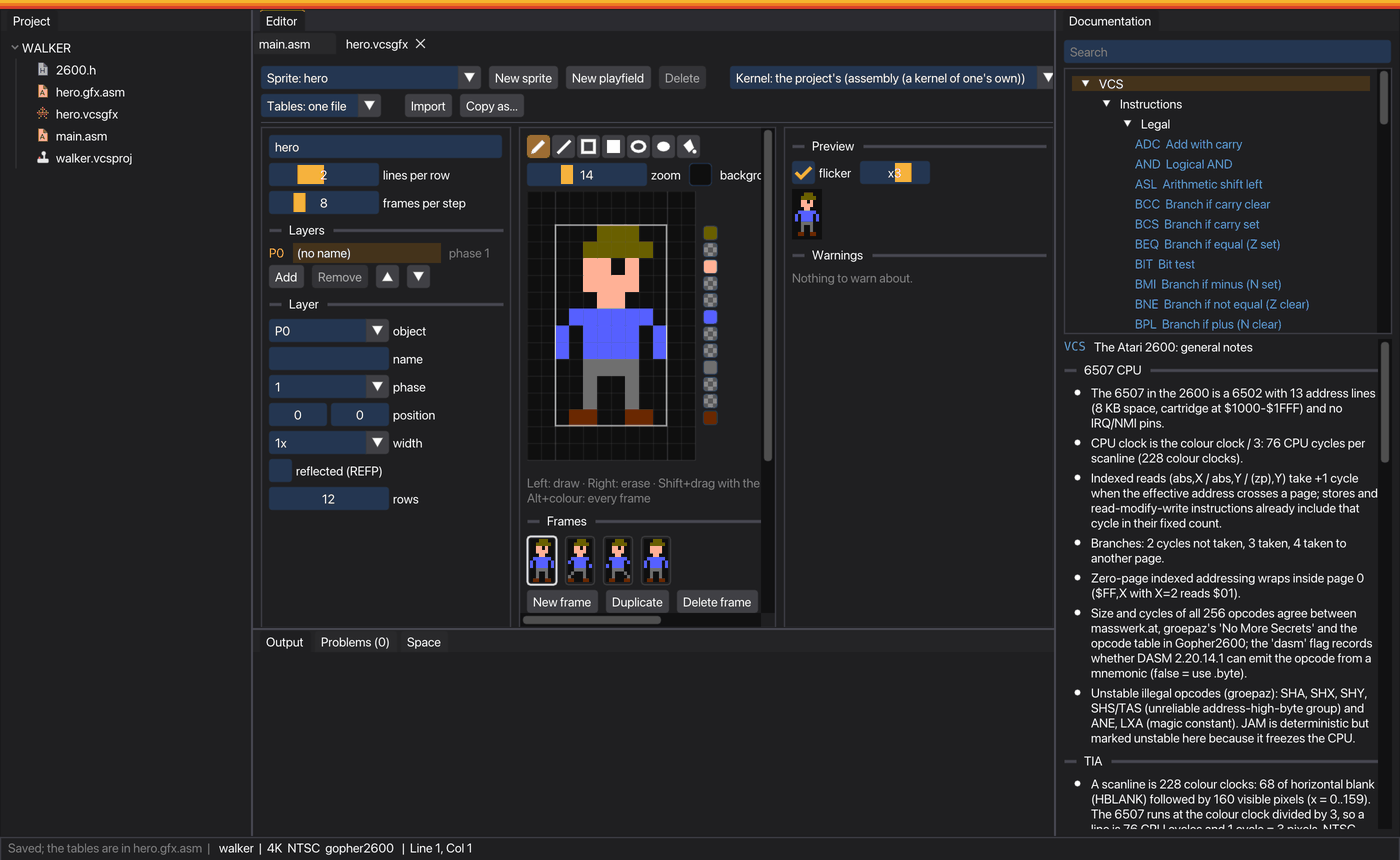
Sprites made of the TIA's objects, flicker phases, playfields row by row, animations, and kernels that decide what you can draw.
Graphics editor →Music editor
Tracker and piano roll for the TIA's two channels, tuning in cents, sound effects, and sampled voices on ELF, DPC+ and CDFJ.
Music editor →batari Basic
batari Basic 1.9 with its errors on the line of the .bas, and graphics kept up to date inside the program.
TinyELF Basic
Al_Nafuur's BASIC machine for the PlusCart and UnoCart: a listing on a SaveKey, run in Gopher2600 or on the cart.
TinyELF Basic →C for ELF and ACE
C running on the cartridge's ARM, for the PlusCart, UnoCart and Chameleon Cart, with the ELF rules checked after linking, and ACE for the M4.
C for ELF and ACE →AI assistant
Optional, and local first: a chat that knows the 2600 and your project, explains errors and proposes changes you review.
The AI assistant →Knowledge base
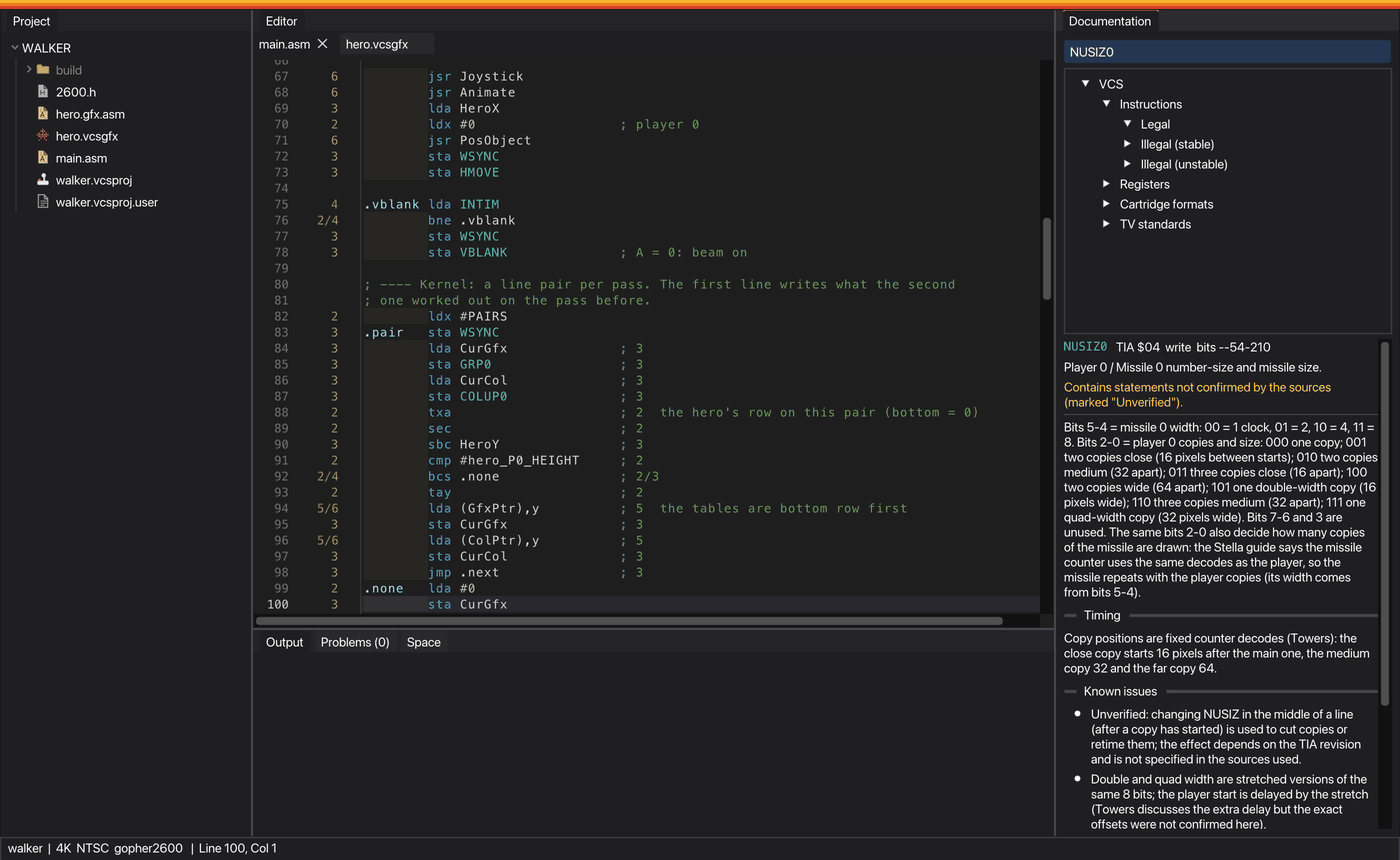
All 256 6502 opcodes, the TIA and RIOT registers with their quirks, cartridge formats and TV standards. Press F1.
The knowledge base →Themes
Dark, Light and two Solarized themes, or your own: every colour is a named role, and themes are files you can share.
Themes and languages →Getting started
Install the tools, make a project from a template or an example, and learn your way around the panels.
Getting started →Screenshots
A look inside
Licences
Free, and your games are yours
- The program and its icon are GPL-3.0-or-later.
- The knowledge base is CC BY-SA 4.0, and every fact in it lists its source.
- The project templates and examples are CC0: the games you make from them are yours to license as you like.
- DASM, batari Basic, Stella, Gopher2600 and the ARM toolchain are not bundled: VCSIDE finds them, or tells you where to get them.